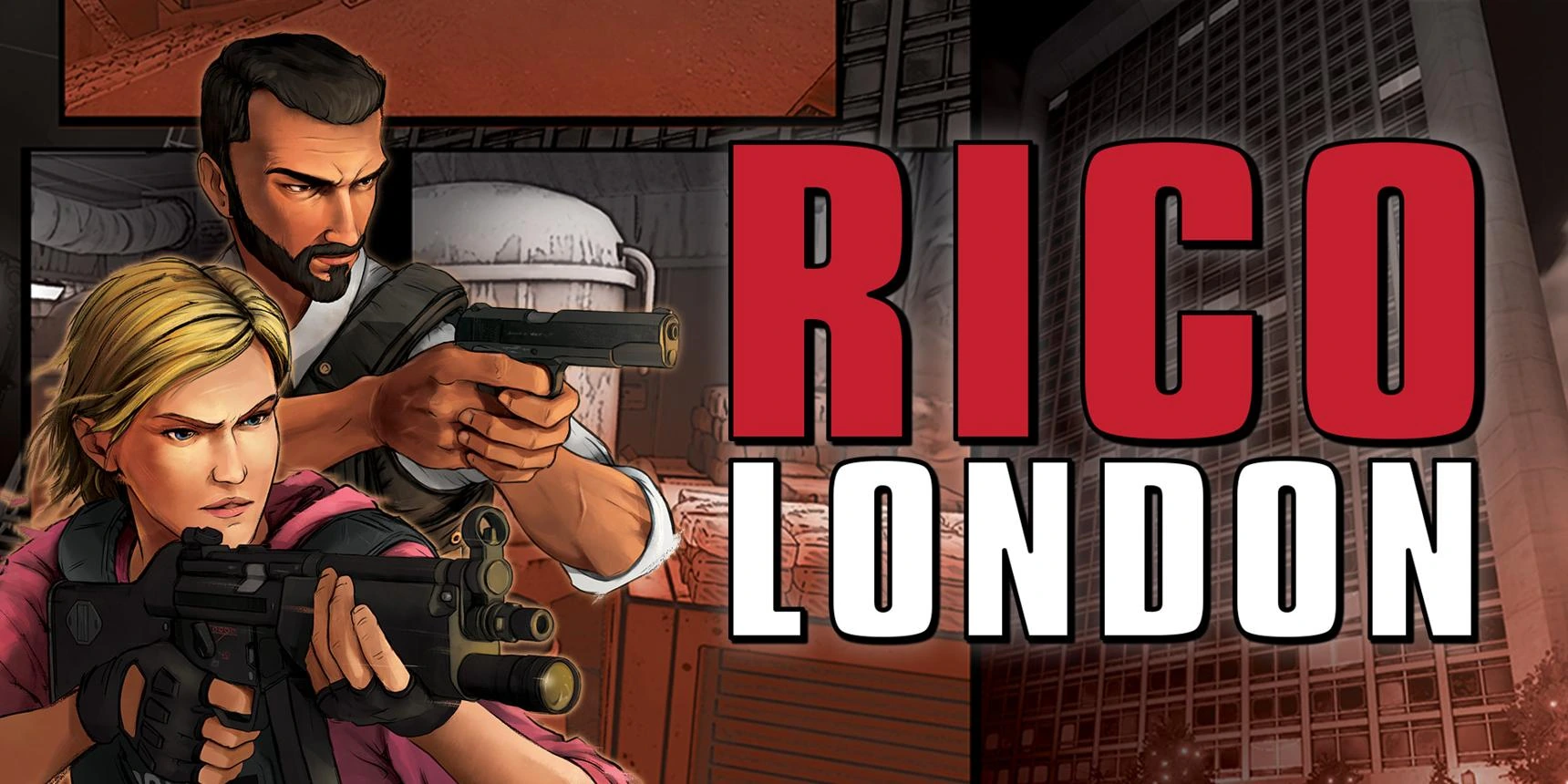
RICO London launched as a fast-paced cel-shaded FPS with a simple promise: kick down doors, clear rooms, shoot through gangs and climb a London high-rise either solo or with a partner. It was designed as an arcade-style buddy cop shooter rather than a slow tactical sim, and that identity still defines how the game should be understood today.
Originally released on 9 September 2021 for PC and Nintendo Switch, RICO London later reached PlayStation and Xbox platforms after its initial launch window. Developed by Ground Shatter and published by Numskull Games, the game arrived as a follow-up to RICO, keeping the same broad idea of procedural room clearing while moving the action to London at the turn of the millennium.
The old launch story was about excitement: a September release, co-op support, cel-shaded action and a retro arcade tone. In 2026, the more useful question is different: where does RICO London sit now, and who is it actually for?
What Is RICO London?

RICO London is a first-person co-op shooter built around short, aggressive room-clearing encounters. You play as D.I. Redfern and her partner Ahmad Khan as they push through a high-rise building controlled by East End gangsters. The setup is pure action cinema: one building, armed criminals, escalating danger and a steady climb toward the top.
The game does not try to be Rainbow Six, SWAT or a realistic police tactics simulator. It is closer to an arcade shooter with buddy cop energy. The visual style is comic-book cel shading, the action is loud, and the rhythm is built around breaching doors, shooting fast and surviving long enough to move to the next stage.
That makes the game easy to understand. RICO London is not about deep narrative, complex stealth or slow planning. It is about impact: crash into a room, enter slow motion, identify threats, shoot cleanly, grab weapons, manage health and keep moving.
The Co-Op Hook

The strongest part of RICO London’s concept is co-op. The game can be played solo, but it makes more sense with another player because the entire buddy cop idea depends on shared chaos.
The game supports cooperative play, including local split-screen and online co-op depending on platform. Co-Optimus lists RICO London across PC, Nintendo Switch, PlayStation 4 and Xbox platforms with co-op support, reinforcing that the game was built around two-player action rather than only single-player shooting.
Co-op changes the feel of the game because room clearing becomes less predictable. One player can push forward while the other watches angles. One can grab dropped weapons while the other manages enemies. When the game works well, that small amount of coordination gives simple encounters more energy.
On Nintendo Switch, the local co-op angle was especially important because the console naturally supports quick shared play. The old article mentioned tabletop play, which fit the Switch’s identity at the time: portable, casual, local and easy to hand to a second player.
Breaching, Slow Motion and Arcade Pressure

RICO London’s main loop is built around breaching rooms. Doors are not just transitions between spaces; they are the start of each little encounter. You kick in, time slows down, enemies react, and the player has a short opportunity to take control before the room turns messy.
That slow-motion breach mechanic is the most important piece of the design. It gives the game its action-movie rhythm. It also keeps the shooting from feeling completely ordinary. Without that door-kick moment, RICO London would risk becoming a very simple corridor FPS. With it, the game has at least one strong signature action.
The arcade pressure comes from health management and difficulty rules. The old-school design means players cannot simply hide behind a wall and wait for health to return. Medkits matter. Mistakes stack. On harder settings, permadeath and friendly fire increase the tension, especially in co-op where one careless shot can damage the run.
This is where RICO London is most honest about itself. It wants repeated attempts, fast decisions and imperfect runs. It is not a carefully scripted campaign. It is a procedural shooter that expects players to fail, restart and try cleaner tactics.
Procedural Levels and Replay Value
RICO London uses procedurally generated levels, which means the exact room order and encounters can change between runs. This was one of the game’s main selling points at launch. The idea is simple: if no two runs are exactly the same, the co-op loop should stay fresh for longer.
In practice, procedural generation helps and limits the game at the same time. It can make quick sessions more replayable, but it cannot replace handcrafted mission design. A strong procedural shooter still needs enough enemy variety, weapon feel and encounter difference to avoid repetition.
That is the main challenge for RICO London. The format is strong for short bursts, especially with a friend, but the same high-rise structure and room-clearing rhythm can start to feel familiar if the player expects a deeper campaign.
As of 2026, that is probably the fairest way to frame the game: RICO London works best as an arcade co-op shooter for quick sessions, not as a major FPS built for long-term mastery.
Weapons, Medals and Upgrades

Between stages, players earn medals that function as currency for upgrades and supplies. These can be used to buy medkits, weapons and permanent improvements such as reduced recoil or restored health.
The weapon names lean heavily into action movie references, which fits the tone. The game is not trying to be subtle. Shotguns, sidearms and SMGs are part of the fantasy of blasting through a criminal tower like a low-budget buddy cop film turned into a comic-book shooter.
This upgrade structure gives players a reason to care about performance during each stage. Clearing rooms is not only about survival. It feeds into the next run, the next purchase and the next chance to push higher.
Still, the upgrade system is fairly straightforward. It supports the arcade loop rather than transforming it. Players looking for deep weapon builds, extensive customization or RPG-style progression may find it light.
How RICO London Was Received
RICO London did not become a major breakout shooter after launch. Its Steam page lists the game with a “Mixed” user review rating, with 48% of 33 user reviews marked positive at the time of the captured store data. That small review pool suggests a niche release rather than a large PC hit.
That reception fits the game’s position. RICO London has a clear idea, but it is also modest. It is built around a narrow loop, and players who enjoy that loop may have fun with it, especially in co-op. Players expecting a more polished FPS campaign, stronger enemy variety or deeper tactical systems are more likely to bounce off.
Metacritic also lists RICO London as a 2021 FPS developed by Ground Shatter and published by Numskull Games, which places it firmly as a smaller genre release rather than a mainstream shooter event.
Who Should Play RICO London in 2026?

RICO London is easiest to recommend to players who know exactly what they want from it. This is not the game to pick if you want a polished cinematic shooter, a realistic tactical experience or a deep roguelite progression system.
It makes more sense if you want a simple co-op FPS with a comic-book look and arcade pacing. It can work well as a casual evening game, especially with someone who enjoys chaotic room-clearing and does not mind repetition.
Players who enjoy these elements may get the most out of it:
- two-player co-op shooters;
- fast room-clearing action;
- cel-shaded comic-book visuals;
- arcade difficulty rules;
- short repeatable runs;
- Switch or couch co-op sessions.
The game is less ideal for players who need strong narrative, polished AI, deep mission variety or long-term progression. RICO London is more of a snack than a full meal.
Platform Notes
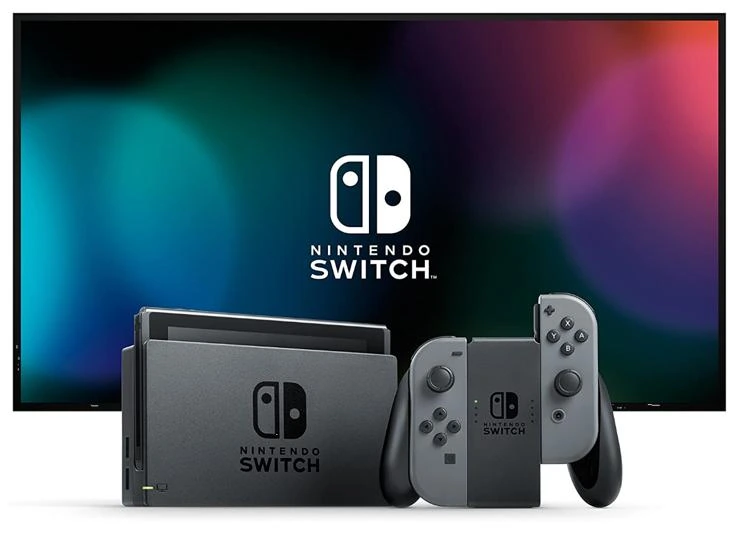
At launch, the clearest release information was PC and Nintendo Switch on 9 September 2021, with PlayStation and Xbox versions planned afterward. Press materials from the period confirm that Steam and Nintendo Switch launched first, with PlayStation 4 following later and Xbox due after that.
Current store and database listings identify the game as a Windows PC release on Steam, with Ground Shatter as developer and Numskull Games as publisher. Third-party store data also lists Steam Deck support as unsupported, which matters for players considering handheld PC play in 2026.
For most players, the best version depends on how they intend to play. PC is the cleanest option for mouse aiming. Switch makes sense for portable or local co-op appeal. Console versions fit players who prefer couch play and controller shooting.
Why RICO London Still Has a Place
RICO London is not a hidden masterpiece, but it has a clear lane. The FPS market is crowded with military shooters, extraction games, battle royales, hero shooters and massive live-service projects. A small cel-shaded buddy cop shooter with procedural levels and local co-op feels almost old-fashioned by comparison.
That is not a weakness by itself. Sometimes a game only needs a compact idea and the confidence to stay inside it. RICO London’s best moments come from that directness: kick the door, slow time, shoot fast, survive, upgrade and do it again.
The problem is that directness also limits it. The game needs the player to enjoy repetition, simple systems and co-op chaos. Without that, the loop can feel thin.
Final Take

RICO London is a small arcade FPS with a stronger premise than long-term reputation. Its cel-shaded style, buddy cop setup, co-op support and breach-and-clear loop give it a recognizable identity, but its mixed reception shows that the idea did not fully land for every player.
In 2026, the best way to view RICO London is not as a major shooter that got overlooked, but as a niche co-op option for players who enjoy fast, messy, comic-book action in short sessions. It belongs in the same conversation as smaller genre experiments that do one thing clearly rather than trying to compete with blockbuster FPS campaigns.
For the right pair of players, that may be enough.